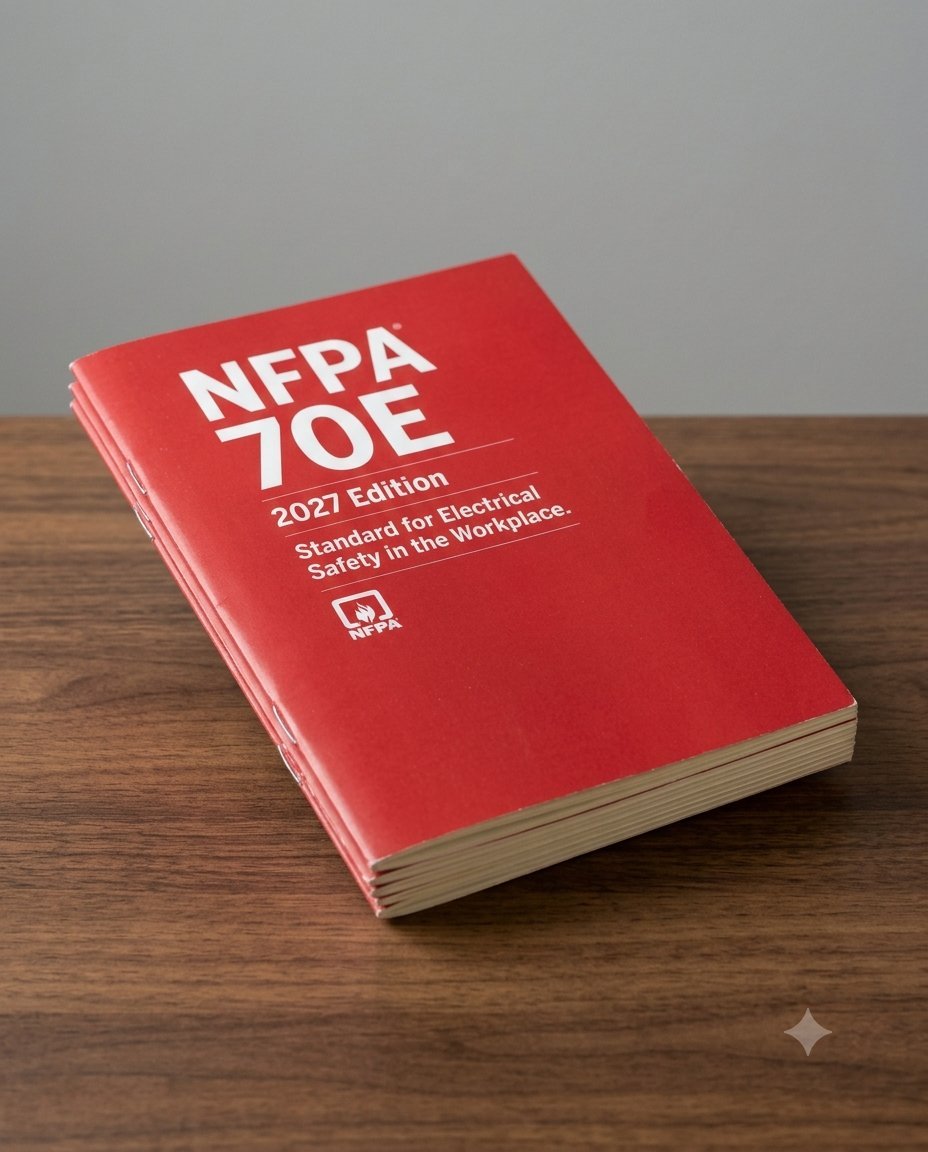
Is NFPA 70E certification available online? Yes — a live, instructor-led virtual class on the current 2027 edition ends in the same defensible certificate as an in-person class; a self-paced click-through slideshow generally does not hold up.
"NFPA 70E certification online" is a search with a trap in it: some of what it returns is a live class with a real instructor that ends in a defensible certificate, and some of it is a click-through slideshow that ends in a PDF. Both call themselves certification. Here is how online NFPA 70E certification actually works in 2027 — what the certificate is, what a legitimate online course looks like, how long it stays current, and the red flags that separate real training from a certificate mill. (If your search started from arc flash training online, that guide covers whether the online format itself satisfies OSHA.)
First, what the certificate actually is
No one — not NFPA, not any training company — issues a government license called an "NFPA 70E certification." What you earn is a certificate of completion: documented evidence that you were trained on the standard, on a specific edition, on a specific date. That document matters, because it is one half of how your employer establishes you as a qualified person. The other half belongs to the employer: qualification requires demonstrated skills and knowledge on the specific equipment you work on, plus safety training on the hazards involved. The certificate is the training record; qualification is the employer's decision built on it. Any provider claiming their card alone "certifies you to work energized" is overselling — we explain the full distinction in what NFPA 70E certification actually is.
How online certification works, step by step
- 1. You enroll in a scheduled live class. Real online certification runs like a classroom with the walls removed: a set date, a live instructor, other students. You connect from a desk, a job trailer, or home.
- 2. You spend the day on the current standard. A legitimate course teaches the 2027 edition of NFPA 70E, in effect since May 6, 2026 — shock and arc flash hazards, the approach boundaries, how PPE is selected, energized work permits, and the 2027 changes (the new additional-person requirement, emergency response planning, job briefings, management of change).
- 3. You interact, because that is the point. The reason live-online beats a recording is the instructor: you can ask about your gear, your procedures, your weird edge case — and the instructor can tell whether the room actually understands.
- 4. You complete an assessment and receive your certificate. The certificate should name the standard and edition (NFPA 70E 2027), the date, the training provider, and the instructor's credentials.
- 5. Your employer completes qualification. The certificate goes in your training file; your employer pairs it with task-specific demonstration on the equipment you actually touch.
Certification on the 2027 edition — live instructor, every week
Live, instructor-led NFPA 70E certification classes run weekly, taught by a Certified Safety Professional on the current 2027 edition. Certificate issued on completion.
See This Week's ClassesHow long it stays current
NFPA 70E requires retraining at intervals not to exceed three years — so treat an online certificate as having a three-year shelf life at most. Four things reset the clock sooner: your tasks or equipment change, your employer's procedures change, an incident or near-miss occurs, or observed work practices show a deficiency. Mark the date; a lapsed certificate is the easiest audit finding there is.
Red flags: how to spot a certificate mill
- Wrong edition. If the course description says 2021 or 2024 — or will not say which edition at all — keep looking. The 2027 edition changed real requirements; training that predates it teaches an obsolete standard.
- Obsolete concepts. A course that still teaches a "prohibited approach boundary" is running content that has been out of the standard since 2015. It is the fastest tell there is.
- No live instructor. Self-paced modules have their place for general awareness, but a slideshow cannot answer a question, probe understanding, or adapt to your equipment — and it makes "demonstrated" skills hard for your employer to stand behind.
- Instant certificates. If the course promises a certificate in an hour, ask what an auditor — or a plaintiff's attorney — will think that hour was worth.
- "OSHA-required" marketing. OSHA does not require NFPA 70E by name; it enforces electrical safety through Subpart S and the General Duty Clause and uses 70E as the recognized industry standard. A provider that gets this basic relationship wrong is not a provider that sweats accuracy.
Online vs. onsite: which certification path fits
Live-online certification fits individuals, small crews, and teams spread across sites — no travel, no minimum headcount, and a weekly cadence means nobody waits a quarter for the next open seat. Onsite group training makes sense when you are certifying a whole crew at once and want the class taught around your own equipment and procedures. The certificate earned is the same; the delivery is the variable. If you are weighing the two, our group training page covers how crew sessions work.
Frequently asked questions
Is online NFPA 70E certification legitimate?
Yes — when it is a live, instructor-led class on the current 2027 edition that ends in an assessment and a dated certificate. The delivery method does not weaken the certificate; an out-of-date curriculum or a no-instructor format does.
How long does the certification last?
Plan on three years maximum — NFPA 70E requires retraining at intervals not to exceed three years, and sooner if tasks, procedures, or equipment change, an incident occurs, or observed performance shows a gap.
Does an online certificate make me a qualified person?
Not by itself. The certificate documents your training; your employer establishes qualification by pairing it with demonstrated skills and knowledge on the specific equipment you work on.
Does OSHA accept online NFPA 70E training?
OSHA does not certify or endorse training providers in this space at all — it enforces electrical safety through Subpart S and the General Duty Clause and measures employers against NFPA 70E as the recognized standard. What matters is that the training is real, current to the 2027 edition, and documented.
What should the certificate itself show?
The standard and edition (NFPA 70E 2027), the completion date, the provider, and the instructor's credentials. If the edition is missing, ask why.
Rick Hauf, CSP is a Certified Safety Professional with 35+ years in EHS and electrical safety. He teaches NFPA 70E nationwide - more than 55 classes a year to electricians, EHS professionals, and Fortune 500 operators including hyperscale data centers, manufacturers, and utilities - with attendee ratings averaging 9.46/10. This article reflects the 2027 edition of NFPA 70E.