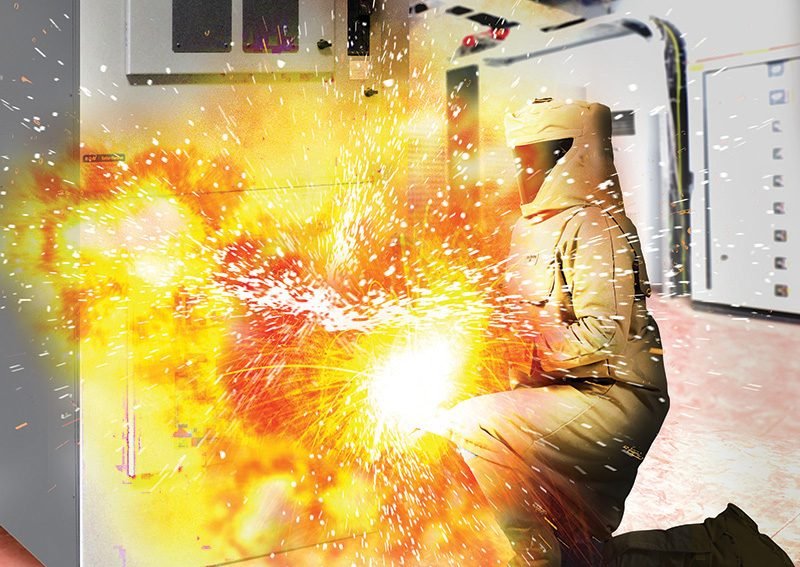
2027 NFPA 70E Arc Flash Training
for Florida
Onsite and virtual electrical safety training purpose-built for Florida's cement manufacturing plants, utility operations, construction sites, and electrical contractors — led by Certified Safety Professionals with 35+ years of field experience.
Florida's construction boom, cement manufacturing operations, utility infrastructure, and electrical contracting workforce represent some of the most active electrical safety training environments in the southeastern United States. From large-scale cement plant motor control centers on the Gulf Coast to utility distribution systems and commercial construction sites across the state, Florida qualified electrical workers face arc flash hazards that demand 2027 NFPA 70E-compliant training — and Federal OSHA enforcement that treats 2027 NFPA 70E as the recognized electrical safety standard.
Upcoming Florida & Virtual 2027 NFPA 70E Training
New sessions are added to the calendar regularly. Contact us for the next confirmed Florida date, or join a live virtual session open to FL teams from anywhere in the state.
Open Enrollment - Upcoming Classes
Florida Sessions
Open-enrollment and private onsite dates serving facilities throughout FL. Contact us for the next confirmed date.
Check FL Dates8-Hour NFPA 70E Qualified Electrical Worker (QEW)
4-Hour NFPA 70E Qualified Electrical Worker (QEW) Refresher
4-Hour NFPA 70E Qualified Electrical Worker (QEW) Refresher
8-Hour NFPA 70E Qualified Electrical Worker (QEW)
Training Built for Florida's Industrial and Construction Sectors
Every program is built around the specific electrical systems, hazard categories, and regulatory requirements your workers actually encounter on the job.
Cement & Building Materials Manufacturing
Florida's cement manufacturing plants operate large-scale motor control centers, high-voltage process drives, and complex distribution systems where arc flash incident energy levels can be extreme. Kiln drive systems, raw mill MCCs, and finish mill electrical equipment require qualified workers trained to 2027 NFPA 70E arc flash PPE selection and energized electrical work permit procedures.
Electrical Contractors
Florida's electrical contracting industry operates under OSHA 29 CFR 1926 Subpart K, which incorporates 2027 NFPA 70E for shock and arc flash hazard work on existing energized systems. Commercial and industrial electrical contractors working on live panels, switchgear, or energized equipment must have 2027 NFPA 70E-trained qualified workers — a requirement OSHA enforces aggressively.
Utilities & Power Generation
Florida's electric utilities — investor-owned, municipal, and rural electric co-ops — face OSHA 1910.269 requirements alongside 2027 NFPA 70E for substation work, T&D maintenance, and generation facility operations. Arc flash exposure in substation environments can reach 40+ cal/cm² without proper hazard analysis and PPE.
Construction
Florida's robust construction market brings large projects with temporary power systems, paralleled service entrances, and complex site distribution that expose electrical workers to arc flash hazards covered under 29 CFR 1926 Subpart K. We deliver training that addresses both construction-specific hazards and the 2027 NFPA 70E standards that apply when working on existing energized systems.
Healthcare & Hospitals
Florida's growing hospital and healthcare network maintains critical electrical infrastructure — transfer switches, generator systems, UPS, and distribution panels — where qualified workers must be trained to 2027 NFPA 70E standards and understand NFPA 99 electrical system requirements for healthcare facilities.
Data Centers & Technology
Florida data centers — concentrated in Miami, Tampa, Jacksonville, and Orlando metro areas — operate critical electrical infrastructure requiring 2027 NFPA 70E-trained workers for any energized maintenance. Arc flash hazard analysis and qualified worker certification are baseline compliance requirements. See our guide to 2027 NFPA 70E electrical safety for data centers for more on UPS, PDU, and switchgear-specific hazards.
Florida & Federal OSHA: Electrical Safety Requirements
Florida does not have a State Plan — all Florida employers fall under Federal OSHA jurisdiction. For electrical safety, this means compliance with 29 CFR 1910 Subpart S (general industry), 29 CFR 1926 Subpart K (construction), and 29 CFR 1910.269 (utilities).
Federal OSHA enforcement treats 2027 NFPA 70E as the recognized standard for arc flash and electrical safety. Employers who have trained their workers to 2027 NFPA 70E have the strongest available defense during inspections and after incidents.
OSHA's General Duty Clause (Section 5(a)(1)) requires employers to protect against recognized hazards, and arc flash is explicitly recognized in OSHA guidance documents. For Florida cement manufacturers, electrical contractors, and utility workers, 2027 NFPA 70E training is not optional — it is the documented baseline OSHA expects.
Florida is a Federal OSHA state. There is no state-level OSHA plan. All private-sector employers in Florida fall under Federal OSHA 29 CFR 1910 (general industry), 29 CFR 1926 (construction), and 29 CFR 1910.269 (utilities and electric power generation).
OSHA
1926 K
2027
Study
2027 NFPA 70E Training by Metro in Florida
We publish dedicated pages for Jacksonville, Orlando and Tampa, each covering the industrial employers, scheduling and delivery options specific to that metro. Everywhere else in Florida is served from this page — onsite at your facility or live online.
We Deliver Training Across Florida
Upcoming Open-Enrollment NFPA 70E Classes in Florida
Live, instructor-led classes to the 2027 edition — reserve individual seats, or bring us onsite for your whole team.
Common Questions About Florida 2027 NFPA 70E Training
The 2027 edition — in effect since May 6, 2026 — tightens several requirements employers should know about. Highlights include a new requirement for an additional person trained in emergency response whenever the energized work permit calls for shock or arc flash PPE, a stronger expectation that the emergency response plan is settled before a panel is ever opened, job briefings that cover the specific task’s hazards and required PPE, and a management-of-change expectation that incident-energy analyses are reviewed whenever the electrical system changes — not just on a fixed calendar. Every class we teach is built on the 2027 edition.
Does OSHA require 2027 NFPA 70E training for Florida electrical contractors?
OSHA 29 CFR 1926 Subpart K requires electrical contractors to protect workers from arc flash and shock hazards on construction sites. 2027 NFPA 70E is OSHA's recognized standard for meeting this requirement. Electrical contractors with workers performing energized work — including panel terminations, switchgear maintenance, and work on existing energized systems — need qualified workers trained to 2027 NFPA 70E. Florida is a Federal OSHA state, so enforcement comes directly from OSHA with no state-level modifications.
Can training be delivered at a cement plant or industrial facility?
Yes. We routinely deliver 2027 NFPA 70E training at cement manufacturing facilities and heavy industrial sites. We customize the curriculum around your facility's specific electrical systems, PPE inventory, and hazard categories — not generic textbook examples. For cement plants, this means addressing kiln drive MCCs, high-voltage process equipment, and the elevated incident energy levels common in bulk materials processing environments.
How many workers can attend each session?
All sessions are capped at 20 participants to ensure every worker receives meaningful individual engagement with the material and group exercises. We do not run large-group lecture formats. If your facility has more than 20 workers who need training, we schedule multiple sessions — which can be run on consecutive days or across different shifts.
How does 2027 NFPA 70E apply to Florida utility workers?
Florida utility workers performing substation maintenance, T&D operations, and generation facility work fall under OSHA 29 CFR 1910.269 as well as general industry electrical safety requirements. 2027 NFPA 70E provides the framework for arc flash hazard analysis, PPE selection, and safe work practices that satisfy OSHA's recognized standard of care for utility electrical workers. Substation arc flash exposures can reach 40+ cal/cm² — which makes 2027 NFPA 70E-compliant PPE selection and incident energy analysis essential, not optional.
How quickly can training be scheduled for a Florida facility?
We typically respond to quote requests within 24 hours and can schedule training within 2–3 weeks for most Florida locations. For urgent needs — post-incident retraining or OSHA inspection-driven scheduling — we can often accommodate faster timelines. Contact us at (813) 725-0999 or safety@arcflashcertification.com to discuss your timeline.
Does virtual 2027 NFPA 70E training satisfy Federal OSHA requirements in Florida?
Yes — live, instructor-led virtual training satisfies Federal OSHA 29 CFR 1910.332 and 1910.333 (general industry) and 29 CFR 1926 Subpart K (construction) requirements when the training covers required content and allows real-time participant interaction. Our virtual sessions are fully live with Q&A throughout, scenario-based instruction adapted to your industry, and certificates of completion provided electronically for each participant.
Do you provide 2027 NFPA 70E training on Florida's Treasure Coast, including Fort Pierce?
Yes. We deliver onsite and virtual 2027 NFPA 70E training throughout the Treasure Coast, including Fort Pierce, Port St. Lucie, Vero Beach, and Stuart. The region's mix of agricultural processing, utility infrastructure, and light industrial facilities gets the same approach as any other Florida location — curriculum built around your facility's specific electrical systems and hazard categories, not generic textbook examples.
Schedule 2027 NFPA 70E Training for Your Florida Facility
Onsite or virtual. Cement plants, electrical contractors, utilities, construction — we build every program around your specific electrical hazards and workforce.
Bring This Training to Your Team in Florida
Onsite or private virtual — scheduled around your shift, delivered to your whole crew at once, at direct-client rates. No open-enrollment seat limits.