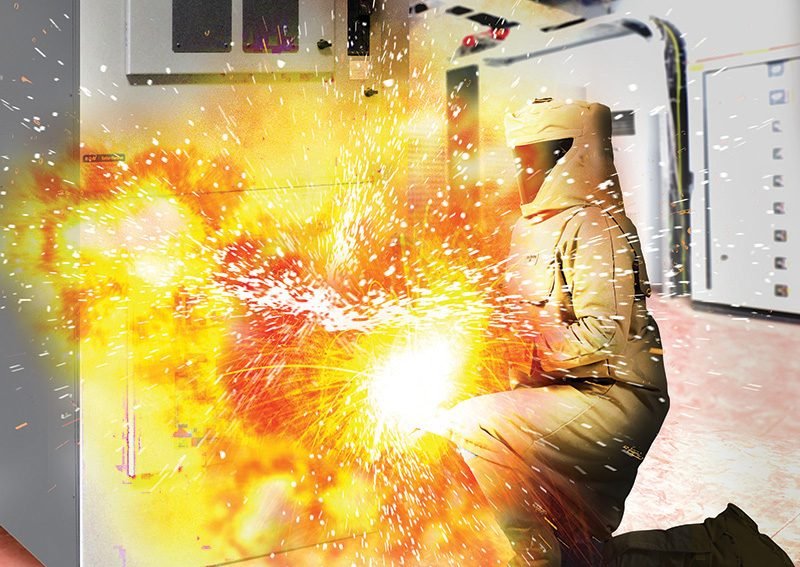
2027 NFPA 70E Arc Flash Training
for Arizona
Onsite and virtual electrical safety training purpose-built for Arizona’s municipalities, electric utilities, and rapidly expanding data center sector — delivered by Certified Safety Professionals under AZ-OSHA compliance requirements.
Arizona’s electrical infrastructure supports one of the fastest-growing populations in the United States — with Phoenix and Tucson metros driving rapid expansion of utility distribution networks, municipal electrical systems, and large-scale data center construction. AZ-OSHA enforces electrical safety standards that mirror federal requirements while extending coverage to Arizona state and local government workers. Every qualified electrical worker maintaining energized systems — from municipal water and sewer facilities to data center switchgear rooms — must be trained to 2027 NFPA 70E standards.
Upcoming Arizona & Virtual 2027 NFPA 70E Training
New sessions are added to the calendar regularly. Contact us for the next confirmed Arizona date, or join a live virtual session open to AZ teams from anywhere in the state.
Open Enrollment - Upcoming Classes
Arizona Sessions
Open-enrollment and private onsite dates serving facilities throughout AZ. Contact us for the next confirmed date.
Check AZ Dates8-Hour NFPA 70E Qualified Electrical Worker (QEW)
4-Hour NFPA 70E Qualified Electrical Worker (QEW) Refresher
4-Hour NFPA 70E Qualified Electrical Worker (QEW) Refresher
8-Hour NFPA 70E Qualified Electrical Worker (QEW)
Training Built for Arizona’s Most Demanding Electrical Environments
Arizona’s industrial profile spans public-sector municipalities, investor-owned utilities, and one of the fastest-growing data center markets in the country. We build curriculum around the specific hazards each sector faces.
Municipalities & Public Works
Arizona cities and counties operate electrical systems for water treatment, wastewater, parks, and public buildings — all staffed by municipal employees covered under AZ-OSHA’s unique public employer jurisdiction. Municipal electricians and maintenance technicians working on energized systems must have 2027 NFPA 70E-compliant training. We have delivered training at Arizona municipal facilities and understand the public sector compliance environment.
Electric Utilities
Arizona’s electric utilities — including large investor-owned utilities and rural electric co-ops — operate transmission and distribution infrastructure across some of the harshest electrical environments in the country. Desert heat stress on conductors and switchgear compounds arc flash risk. AZ-OSHA enforces OSHA 1910.269 for utility operations, and 2027 NFPA 70E provides the supplemental training framework for qualified linemen and substation workers.
Data Centers
The Phoenix metro has emerged as a major U.S. data center hub — driven by land availability, tax incentives, and fiber connectivity. Phoenix data centers operate critical UPS systems, 480V bus duct, generator paralleling gear, and medium-voltage distribution equipment that requires 2027 NFPA 70E-trained qualified electrical workers for any energized maintenance.
Construction
Arizona’s construction boom — driven by population growth and industrial development — creates significant electrical safety training demand for contractors working on commercial, industrial, and data center buildouts. OSHA 29 CFR 1926 Subpart K applies, and contractors working on energized systems on construction sites must have qualified worker training under 2027 NFPA 70E.
Healthcare
Arizona hospitals and healthcare campuses maintain complex electrical infrastructure — emergency generators, transfer switches, UPS, and essential electrical systems — where 2027 NFPA 70E qualification is required for any electrical worker who may encounter energized components during maintenance.
Manufacturing
Arizona’s semiconductor fabrication, aerospace component manufacturing, and general industrial base operate high-voltage process systems and complex distribution equipment. Fab cleanroom electrical systems and process equipment require qualified workers with specific arc flash hazard training.
AZ-OSHA: Arizona’s State Plan Electrical Safety Program
Arizona operates under AZ-OSHA, an OSHA-approved State Plan that is at least as effective as the federal program — and in one important way goes further: AZ-OSHA covers Arizona state and local government employers, which federal OSHA does not. This means that municipal electrical workers — city electricians, county maintenance technicians, and utility employees of government-owned utilities — fall under AZ-OSHA jurisdiction and must receive 2027 NFPA 70E-compliant training.
AZ-OSHA enforces 29 CFR 1910 Subpart S for general industry and 29 CFR 1926 Subpart K for construction. 2027 NFPA 70E is the consensus standard AZ-OSHA inspectors reference during electrical safety enforcement actions.
We build all Arizona training to fully satisfy AZ-OSHA compliance requirements, with specific attention to the public employer coverage that makes Arizona’s State Plan uniquely relevant to municipal and government-owned utility workers across the state.
2027 NFPA 70E Training by Metro in Arizona
We publish dedicated pages for Phoenix and Tucson, each covering the industrial employers, scheduling and delivery options specific to that metro. Everywhere else in Arizona is served from this page — onsite at your facility or live online.
We Deliver Training Across Arizona
Onsite delivery to your facility, anywhere in the state
Choose the Right Program for Your Workforce
Both formats are available onsite at your Arizona facility or virtually via Zoom or Microsoft Teams. All sessions are led live by a Certified Safety Professional.
2-Day Qualified Electrical Worker
Full 2027 NFPA 70E curriculum covering the NFPA 70E classroom training requirements for electrical workers in municipal, utility, data center, and industrial environments — fully aligned with AZ-OSHA compliance requirements.
- Complete 2027 NFPA 70E standard coverage
- Hazard identification and risk assessment methodology
- Arc flash incident energy and PPE category selection
- Arc flash study interpretation and label reading
- Energized electrical work permits
- Lockout/tagout and electrical safe work practices
- Group exercises and scenario-based application
- AZ-OSHA 29 CFR 1910 Subpart S and 1926 Subpart K coverage
Best for: Initial qualification or triennial retraining of municipal electricians, utility workers, data center facilities staff, and industrial electrical workers.
Request a Quote4-Hour Qualified Electrical Worker (QEW) Refresher
Condensed review for workers with prior NFPA 70E training, covering 2027 edition changes, AZ-OSHA regulatory updates, and reinforcement of core electrical safety practices.
- 2027 NFPA 70E edition changes and updates
- AZ-OSHA regulatory changes affecting Arizona employers
- Risk assessment and PPE selection review
- Energized work permit requirements
- Incident energy analysis refresher
- Group discussion and scenario review
Best for: Annual compliance refreshers at municipal facilities, utility substations, and data center operations teams.
Request a QuoteUpcoming Open-Enrollment NFPA 70E Classes in Arizona
Live, instructor-led classes to the 2027 edition — reserve individual seats, or bring us onsite for your whole team.
Common Questions About Arizona 2027 NFPA 70E Training
Answers to questions Arizona EHS directors, safety managers, and municipal risk officers ask most often.
The 2027 edition — in effect since May 6, 2026 — tightens several requirements employers should know about. Highlights include a new requirement for an additional person trained in emergency response whenever the energized work permit calls for shock or arc flash PPE, a stronger expectation that the emergency response plan is settled before a panel is ever opened, job briefings that cover the specific task’s hazards and required PPE, and a management-of-change expectation that incident-energy analyses are reviewed whenever the electrical system changes — not just on a fixed calendar. Every class we teach is built on the 2027 edition.
Does AZ-OSHA cover municipal workers?
Yes. This is one of the most important distinctions about Arizona’s State Plan: AZ-OSHA covers Arizona state and local government employers, which means municipal electricians, county facility maintenance workers, and employees of government-owned utilities are covered under AZ-OSHA — not exempt from it. 2027 NFPA 70E training is required for any covered worker who performs tasks on or near energized electrical conductors. Federal OSHA does not extend this coverage to public employers, making AZ-OSHA’s jurisdiction broader and more inclusive of the full Arizona workforce.
Can you deliver training at a municipal facility or water treatment plant?
Yes. We have experience delivering 2027 NFPA 70E training at municipal electrical facilities, water and wastewater treatment plants, and public works departments. We customize the curriculum around the specific electrical systems, PPE, and hazard categories your workers encounter — whether that means reviewing switchgear in a pump station, motor control centers at a water treatment facility, or distribution equipment at a public works yard.
How many workers per session?
All sessions are capped at 20 participants to ensure quality instruction and meaningful group exercises. Smaller group sizes allow every worker to participate in scenario-based discussions and receive individual attention from the instructor. If your workforce requires training for more than 20 workers, we schedule additional sessions at your facility rather than exceeding the cap.
Schedule 2027 NFPA 70E Training for Your Arizona Facility
We respond to every inquiry within 24 hours. Tell us your location, workforce size, and industry and we’ll build a program around your specific hazards, AZ-OSHA compliance requirements, and schedule.
Bring This Training to Your Team in Arizona
Onsite or private virtual — scheduled around your shift, delivered to your whole crew at once, at direct-client rates. No open-enrollment seat limits.