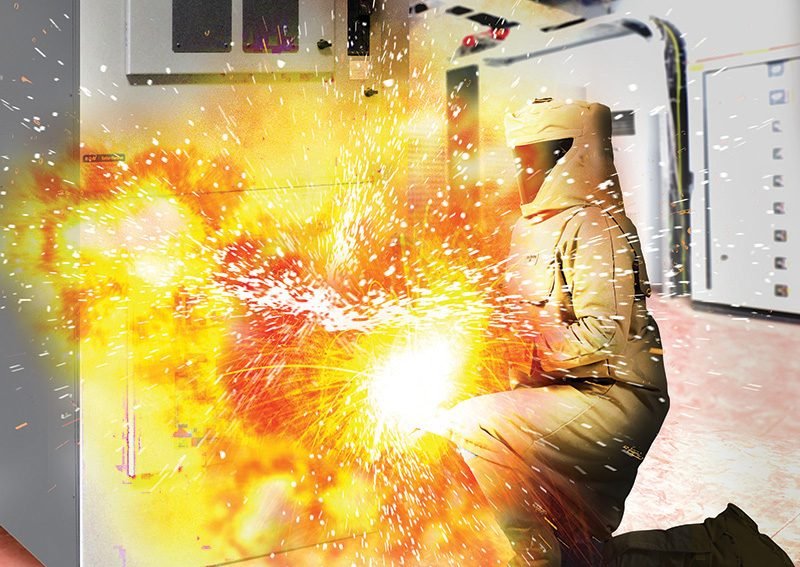
2027 NFPA 70E Arc Flash Training Built for Michigan’s Automotive & Advanced Manufacturing Workforce
Onsite and virtual electrical safety training designed around Michigan's automotive assembly plants, Tier 1 and Tier 2 supplier facilities, and the state's expanding EV battery and advanced robotics investment. Fully updated for the 2027 NFPA 70E edition's revised PPE and additional-person requirements, and built to meet MIOSHA state plan inspection expectations.
Michigan's identity as the historic center of American automotive manufacturing still drives its industrial electrical footprint today, from Detroit-area final assembly lines to the dense network of Tier 1 and Tier 2 supplier plants that stamp, weld, and wire vehicles across the southeastern part of the state. That base is now layered with a new wave of EV battery manufacturing investment and increasingly automated, robotics-heavy production floors, alongside longstanding chemical manufacturing operations rooted in the Midland area. Each of these environments depends on high-amperage motor control centers, robotic welding cells, and industrial switchgear that put maintenance electricians and qualified workers in regular contact with energized equipment. Because Michigan operates its own OSHA-approved State Plan through MIOSHA, employers here answer to state compliance officers who expect documented, current 2027 NFPA 70E training as part of a functioning electrical safety program. Getting that training right matters both for worker safety and for standing up to a MIOSHA inspection.
Upcoming Michigan & Virtual 2027 NFPA 70E Training
New sessions are added to the calendar regularly. Contact us for the next confirmed Michigan date, or join a live virtual session open to MI teams from anywhere in the state.
Open Enrollment - Upcoming Classes
Michigan Sessions
Open-enrollment and private onsite dates serving facilities throughout MI. Contact us for the next confirmed date.
Check MI Dates8-Hour NFPA 70E Qualified Electrical Worker (QEW)
4-Hour NFPA 70E Qualified Electrical Worker (QEW) Refresher
4-Hour NFPA 70E Qualified Electrical Worker (QEW) Refresher
8-Hour NFPA 70E Qualified Electrical Worker (QEW)
Training for Michigan's Automotive Assembly, Advanced Manufacturing, and EV Battery Production
Detroit-area final assembly plants run body shops, paint shops, and general assembly lines on 480V distribution feeding robotic welders and conveyor drives around the clock. Qualified maintenance electricians need 2027 NFPA 70E training built around live troubleshooting on production equipment that can't sit idle.
Michigan's dense automotive supplier network runs injection molding, stamping presses, and CNC machining lines under demanding production schedules. Electricians and technicians supporting these plants face frequent energized diagnostic work on motor control centers and servo drive systems.
New and expanding EV battery plants across Michigan bring high-voltage DC systems, large-format battery formation equipment, and medium-voltage utility interconnections that differ significantly from traditional automotive electrical work. 2027 NFPA 70E training for these facilities has to address hazards conventional auto plant training doesn't cover.
The Midland area's chemical manufacturing operations run process control systems, large motor-driven pumps, and electrical infrastructure integrated tightly with hazardous process areas. Qualified workers here need training that addresses both arc flash exposure and the combined electrical/chemical hazard environment.
Michigan's electrical contracting workforce serves automotive plant retrofits, new EV battery facility construction, and commercial buildouts across Detroit, Grand Rapids, and Lansing. Contractors performing energized work need MIOSHA-compliant 2027 NFPA 70E training documentation on file.
Michigan's regional hospital systems around Detroit, Grand Rapids, and Ann Arbor operate emergency power, UPS, and medical equipment electrical systems that must stay online. Facilities engineers and electricians need 2027 NFPA 70E training for energized work in these life-safety-critical environments.
MIOSHA: Michigan's State Plan Electrical Safety Program
Michigan operates under MIOSHA — the Michigan Occupational Safety and Health Administration, part of the Department of Labor and Economic Opportunity — an OSHA-approved State Plan covering both private and public sector employers statewide. MIOSHA enforces electrical safety standards at least as effective as federal requirements, including 29 CFR 1910 Subpart S for general industry and 29 CFR 1926 Subpart K for construction, across Michigan's automotive, manufacturing, and utility workplaces.
2027 NFPA 70E is the consensus standard MIOSHA inspectors reference during electrical safety inspections, and in a state with Michigan's manufacturing density — from Detroit-area vehicle assembly to Tier 1 and Tier 2 supplier plants statewide — inspection activity remains substantial. Employers who cannot document current qualified worker training, energized electrical work permits, and a functioning PPE program face direct citation exposure during a MIOSHA inspection.
Michigan's manufacturing base spans decades-old stamping and assembly operations alongside new EV battery and advanced robotics facilities, often within the same supplier network — each environment carrying distinct arc flash hazard categories and PPE requirements under 2027 NFPA 70E. We build every Michigan program around the specific voltage levels, production environments, and MIOSHA inspection priorities your workforce actually faces.
2027 NFPA 70E Training by Metro in Michigan
We publish dedicated pages for Flint and Grand Rapids, each covering the industrial employers, scheduling and delivery options specific to that metro. Everywhere else in Michigan is served from this page — onsite at your facility or live online.
We Deliver Training Across Michigan
Also training qualified electrical workers in Minnesota and Mississippi.
Michigan Training Program Options
Both formats are delivered onsite at your Michigan facility by CSP-credentialed instructors. Curriculum is built around your specific electrical systems, industry environment, and MIOSHA compliance requirements.
Full 2027 NFPA 70E curriculum with group exercises built around Michigan production environments — automotive assembly line motor control, EV battery formation equipment, and supplier plant switchgear scenarios.
- Complete 2027 NFPA 70E standard coverage
- Arc flash hazard analysis & incident energy calculation review
- PPE category selection, inspection, and use
- Shock hazard boundaries & arc flash boundaries
- Energized electrical work permit — structure and completion
- Lockout/tagout per OSHA 1910.147 & 2027 NFPA 70E
- Group exercises: automotive assembly MCC, EV battery high-voltage systems, and supplier plant switchgear scenarios
- MIOSHA compliance documentation requirements
- Written assessment & certificates of completion
Condensed review of 2027 NFPA 70E changes for workers with prior training. Covers updated documentation requirements, PPE program changes, and regulatory priorities relevant to MIOSHA compliance in Michigan automotive and advanced manufacturing facilities.
- 2027 NFPA 70E changes and updates review
- PPE inspection and category refresher
- Energized work permit documentation review
- MIOSHA enforcement priorities and inspection focus areas
- Incident energy reassessment trigger points
- Group discussion: facility-specific MI scenarios
- Certificates of completion for recordkeeping
Upcoming Open-Enrollment NFPA 70E Classes in Michigan
Live, instructor-led classes to the 2027 edition — reserve individual seats, or bring us onsite for your whole team.
Common Questions About Michigan 2027 NFPA 70E Training
The 2027 edition — in effect since May 6, 2026 — tightens several requirements employers should know about. Highlights include a new requirement for an additional person trained in emergency response whenever the energized work permit calls for shock or arc flash PPE, a stronger expectation that the emergency response plan is settled before a panel is ever opened, job briefings that cover the specific task’s hazards and required PPE, and a management-of-change expectation that incident-energy analyses are reviewed whenever the electrical system changes — not just on a fixed calendar. Every class we teach is built on the 2027 edition.
Michigan operates its own OSHA-approved State Plan, MIOSHA, administered by the Department of Labor and Economic Opportunity. MIOSHA covers both private and public sector employers and enforces electrical safety requirements at least as effective as federal OSHA's, referencing 2027 NFPA 70E as the standard for evaluating an employer's electrical safety program.
Yes. We deliver training onsite at facilities across Michigan, including automotive assembly plants, supplier manufacturing sites, and EV battery production facilities. We customize the curriculum around your facility's specific voltage levels, equipment, and hazard categories.
All sessions are capped at 20 participants. For larger plants, we schedule multiple sessions so workers from different shifts or production areas can attend sessions built around the equipment they actually work with.
Schedule 2027 NFPA 70E Training for Your Michigan Facility
We respond to every inquiry within 24 hours. Contact us with your location, workforce size, and industry — we'll build a training program around your specific MIOSHA compliance requirements and facility electrical environment.
Bring This Training to Your Team in Michigan
Onsite or private virtual — scheduled around your shift, delivered to your whole crew at once, at direct-client rates. No open-enrollment seat limits.